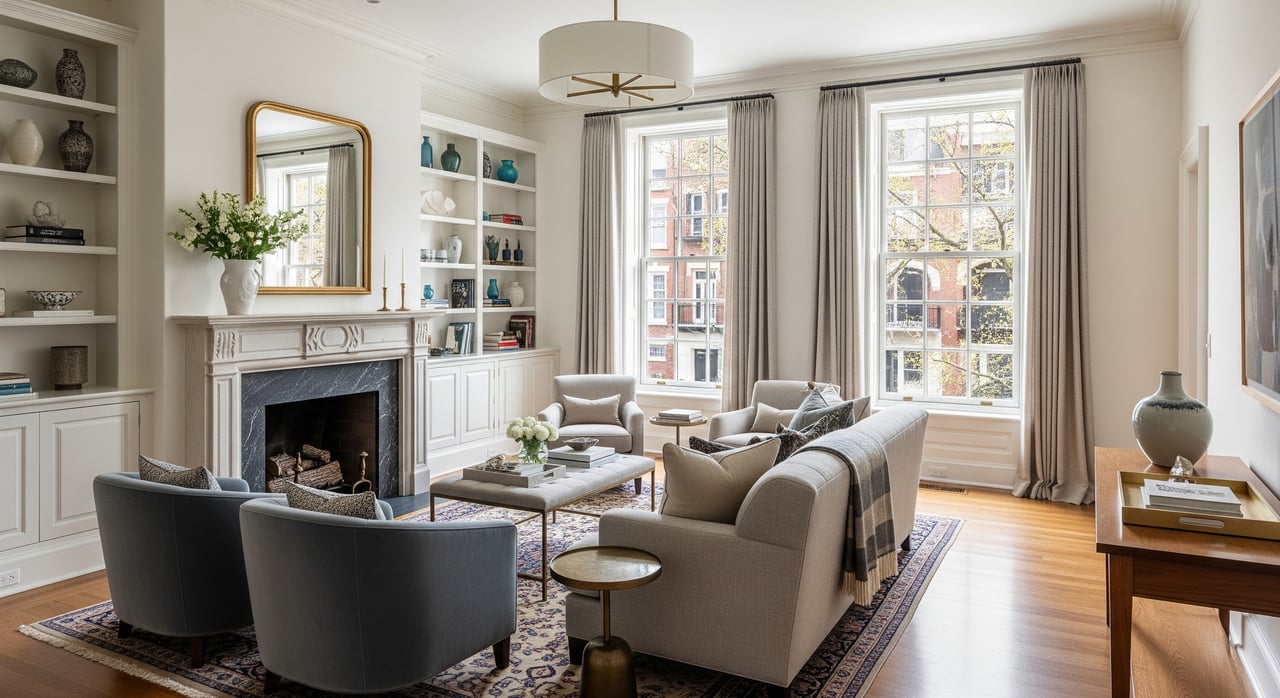
Your first showing happens online. In Washington, D.C.’s luxury market, buyers create shortlists from photos, floor plans, and video before they ever schedule a tour. If you want your home to stand out, professional staging is one of the most effective ways to shape perception and spark action.
In this guide, you’ll see how staging changes buyer behavior, what the process looks like for high-end D.C. listings, and the design choices that matter most. You’ll also learn local considerations that protect your timeline and privacy, plus a simple seller checklist. Let’s dive in.
Why staging matters in D.C. luxury
D.C.’s luxury inventory is diverse. You see historic rowhouses and townhomes in areas like Georgetown and Kalorama, sleek penthouses in Foggy Bottom and along the Capitol Riverfront, and high-end options in Arlington and Alexandria. Each attracts buyers who value lifestyle, finishes, privacy, and security.
Luxury buyers in the region often include executives, diplomats, legal and finance professionals, downsizers seeking turnkey living, and second-home buyers. They expect a polished, lifestyle-forward presentation. Local market reporting from sources like Bright MLS Market Statistics and the Washington Post’s real estate coverage underscores how presentation and pricing strategy work together in this selective segment.
High-end listings also earn wider exposure through editorial features and targeted digital campaigns. Staging ensures the visuals used across channels present your home at its best, which is essential when the buyer pool is smaller and more discerning.
How staging changes buyer response
Most buyers start online, and they rely on photos, video, 3D tours, and floor plans to decide which properties to visit. Industry research from organizations such as the National Association of Realtors highlights the central role of visual media in home searches. Staging and professional photography work together to clarify scale, simplify sightlines, and create a compelling story.
What buyers notice in photos
- Scale and flow: Furnished rooms show true proportions and help buyers understand how spaces connect, which is critical in both historic rowhouses and modern condos.
- Lifestyle cues: Curated art, accessories, and vignettes signal how the home lives, from formal entertaining to executive-level work-from-home.
- Neutral, welcoming feel: Depersonalized yet warm styling helps buyers from varied backgrounds picture themselves in the space.
- Focus on strengths: Staging draws attention to premium materials and architectural details while downplaying minor cosmetic flaws.
- Lighting that flatters: Layered lighting helps spaces look inviting in daylight and at dusk, which pays off in both photos and private tours.
The staging process and timeline
Here is the typical workflow for luxury D.C. listings:
- Pre-listing consult: On-site assessment to define the target buyer, inventory existing furnishings, and set scope. You receive a written plan and estimate.
- Design plan and sourcing: Layouts, furniture scale, fabric and rug selections, lighting, and accessory palette. Decide what to rent and what to keep.
- Implementation: De-cluttering, minor paint touch-ups, deliveries, installation, and styling. Plants and window treatment adjustments are common.
- Photo, video, and tour: Book your shoot once staging is complete. Capture interiors, twilight exteriors, optional drone where allowed, video walk-through, 3D tour, and floor plans.
- Marketing and showings: Use staged assets across MLS, brokerage portals, social ads, print collateral, broker opens, and private events. Refresh staging as needed for showings.
- De-staging: Remove rental items after you reach key milestones such as contract or closing.
Most partial staging can be completed in 1 to 2 weeks. Full staging with specialty items often takes 2 to 4 or more weeks. Photography should be scheduled as soon as staging is finished. If you plan a high-profile launch or media feature, build in extra lead time so all visual assets are ready for a coordinated release.
Costs vary by scope, property size, rental inventory quality, and whether you add art rental or custom pieces. In the luxury segment, many professionals view staging as an investment in conversion. It supports stronger online engagement, higher-quality showings, and often a faster path to premium offers. Industry groups like the Real Estate Staging Association and Home Staging Resource recommend professional staging as a standard part of upper-tier marketing.
Design choices that matter
Layout and scale
Use furniture that fits the architecture and ceiling height. In tall historic rooms, arrangements that emphasize verticality help buyers understand scale. In condos, right-sized pieces clarify how living, dining, and work areas function without crowding.
Art and accessories
Select art that complements the architecture without stealing the show. Curated, neutral works communicate sophistication and let buyers focus on the home’s lines, light, and finishes. Avoid overly personal or polarizing pieces.
Lighting and color
Layer ambient, task, and accent lighting so rooms feel inviting in photos and in person. Warm LED color temperatures around 2700K to 3000K typically flatter natural materials and skin tones. Keep a neutral base palette with layered textures and a restrained accent color to help buyers envision their own style.
Outdoor spaces and views
Terraces, balconies, and roof decks are prized in urban D.C. Stage with scaled outdoor furniture and simple lighting to show entertaining potential. Where views are a draw, position seating to emphasize skyline or monument sightlines.
Sync staging with marketing
Your staged home powers every channel. High-resolution photos, twilight images, 3D or virtual tours, and professionally edited video become the foundation for MLS, social ads, and editorial pitches. Use staged “hero shots” to capture the home’s best angles for primary placements.
Offline, staged spaces elevate print brochures, broker previews, and private launch events. Editorial coverage in local outlets, such as the Washington Post Real Estate section, requires photo-ready rooms that meet magazine-quality standards.
Local rules and logistics
Many D.C. properties sit in historic districts. While interior staging is generally unrestricted, any exterior-visible changes or signage should respect guidelines from the D.C. Historic Preservation Office. Confirm building and association rules for open houses, broker previews, and photography. Drone and aerial work can be limited near federal sites, so verify legal and building permissions before scheduling.
For vendor selection, the region offers experienced stagers, luxury furniture rental firms, and architectural photographers. Consider nationally certified providers through groups like RESA and review portfolios that mirror the level of home you are selling. Resources from Home Staging Resource can also help you evaluate scope and ROI.
Quick seller checklist
- Gather recent comparable sales and note key upgrades.
- Hire an agent, certified stager, and luxury real estate photographer with high-end portfolios.
- Decide consult-only, partial, or full staging. Confirm rental quality and insurance.
- Plan staging and photography 2 to 4 weeks before launch for full staging.
- Prepare marketing deliverables: interior and twilight photos, optional drone, 3D tour, video, floor plans, and print collateral.
- Confirm building approvals for showings, signage, and roof or drone access.
- Remove sensitive items and set privacy rules for what gets photographed.
When presentation meets strategy, you reduce friction for the buyer and create momentum from the first click to the final signature. If you want a design-forward plan tailored to your timeline, market position, and privacy needs, connect with Jeff Lockard to get started. Get a Complimentary Home Valuation.
FAQs
Do D.C. luxury sellers need full or partial staging?
- Many succeed with a mixed approach that keeps select owner pieces and adds rentals for scale, balance, and lifestyle cues in key rooms.
When should staging happen relative to photography?
- Complete staging first, then schedule professional photos, video, 3D tours, and floor plans to capture the finished look.
How long should staging stay in place?
- Most sellers keep staging through active marketing and remove rentals after reaching contract, and sometimes through closing.
Does staging hide important property problems?
- No; staging enhances presentation but does not replace repairs or disclosures, which must be handled per legal and ethical rules.
How does staging differ for historic vs. modern homes?
- Historic homes benefit from styling that highlights period features and scale, while contemporary properties favor clean lines that emphasize finishes, tech, and views.
What building or HOA rules affect staging and media?
- Many condos and co-ops have policies for showings, signage, and drone use; confirm permissions with management before you plan shoots or events.