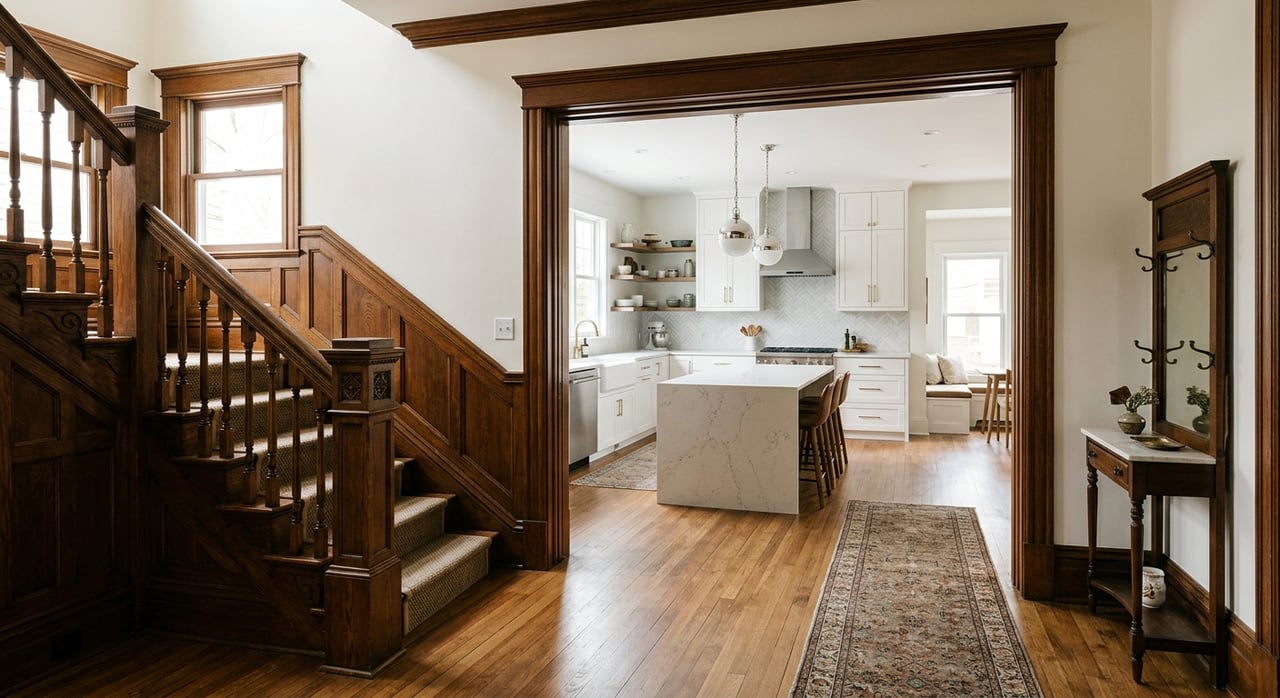
If you own a historic home in Chevy Chase, it is easy to ask the wrong renovation question. Instead of “What would I love to add?” the better resale question is “What will future buyers value, and what will the property support?” In a high-value market where architecture, condition, and presentation all matter, the best updates usually respect the home’s original character while making it feel cleaner, brighter, and easier to live in. Let’s dive in.
Why character matters in Chevy Chase
Chevy Chase, DC has a strong architectural identity rooted in early 20th-century development. According to the National Register nomination for Chevy Chase, the neighborhood began developing in 1907 and expanded significantly in the 1920s, with Colonial Revival, Craftsman, American Foursquare, and Tudor Revival homes among the most common styles.
That matters for resale because buyers in this part of Washington often notice the details that give a home its presence. Original massing, front porches, rooflines, masonry, and window patterns help define whether a renovation feels thoughtful or out of step with the house.
In a premium neighborhood, presentation tends to carry even more weight. The latest available market snapshots cited in the research place Chevy Chase-DC in a high price tier, with values and sale prices above $1.2 million and a relatively competitive pace. That means your renovation strategy should focus on protecting value, not just adding cost.
Start with your address and preservation status
Before you make exterior plans, verify whether your specific property is listed in the DC Inventory of Historic Sites. DC’s preservation system is address-specific, and listed properties are protected under preservation law.
This is especially important in Chevy Chase right now. A proposed Chevy Chase Historic District was submitted in FY 2024, but a proposed district is not the same as a listed district. You should confirm your exact status before assuming what rules apply.
DC’s Historic Preservation Office also encourages a preliminary design review consultation before a permit is filed. In many cases, this early step can help you avoid spending time and money on plans that may need to change later.
Know which projects are easier to approve
If resale is your goal, the smartest renovation is often the one that improves appearance and function without creating avoidable review issues. The DC Historic Preservation Office’s review guidance draws a practical line between minor work and major work.
Minor work typically includes:
- In-kind repairs to masonry, woodwork, siding, and trim
- Roofing repairs or replacement
- Window or door replacement when compatible
- Unobtrusive rear porches or decks
- Similar low-visibility exterior changes
Major work that typically goes to fuller review includes:
- Demolition
- New construction
- Front or side additions
- Large rear additions
- Front porch enclosures or new porches
- Roof additions visible from the street
- Front dormers or new entrances
- Significant changes to front-facade openings or other character-defining features
For resale, that distinction matters. Projects that preserve the street-facing identity of the house are often easier to defend both with reviewers and with buyers.
Renovations that usually make the most sense
In historic Chevy Chase homes, the best resale-minded updates are usually selective, visible, and respectful of the house. They improve how the home shows without stripping out the details that make it special.
Preserve the front elevation
Your exterior creates the first impression online and in person. If your home has a recognizable porch, original masonry, a distinctive roofline, or consistent window spacing, preserving those elements can help maintain the architectural integrity buyers expect in a historic property.
That does not mean you should ignore needed work. In-kind repairs and compatible replacements for woodwork, trim, roofing, windows, and doors are often more defensible than dramatic front-facing changes, especially when your goal is to sell rather than custom-build for long-term personal use.
Refresh kitchens without overbuilding
National remodeling data continues to support smaller, more strategic kitchen updates. In the 2025 Zonda Cost vs. Value report, a minor kitchen remodel delivered a 112.9% return, while larger custom projects generally returned less.
For a historic home, this is a useful signal. Buyers often want kitchens that feel current and functional, but they do not necessarily need a fully reimagined space if the result disrupts the original plan or introduces finishes that feel disconnected from the rest of the house.
A resale-minded kitchen renovation usually focuses on:
- Improving layout friction where possible
- Updating worn or dated surfaces
- Brightening the room visually
- Preserving proportion and architectural flow
- Avoiding overly personalized luxury choices
Update baths with restraint
Bathrooms matter, but they tend to return less than modest kitchen work. In the 2024 Zonda Cost vs. Value report, a midrange bathroom remodel recouped 74%, compared with 96% for a minor kitchen remodel.
That does not mean you should skip the bath. It means you should be selective. Clean finishes, improved lighting, fresh fixtures, and visible maintenance can do more for buyer perception than a highly customized, high-cost overhaul.
Prioritize visible exterior improvements
Zonda’s 2025 data shows that many of the strongest returns come from exterior-focused projects. Among the top-performing projects were garage door replacement, steel entry doors, manufactured stone veneer, and fiber-cement siding.
Not every item translates directly to every historic Chevy Chase property, especially where preservation review applies. Still, the broader lesson is clear: buyers respond to improvements they can see right away, particularly when those updates make the home look well cared for and move-in ready.
What to avoid when resale is the goal
The costliest mistake is often over-improving in ways that reduce flexibility, complicate approvals, or weaken the home’s original design. In Chevy Chase, buyers are often paying for architecture and setting as much as square footage.
Be cautious with projects like:
- Front-facing additions that alter the original massing
- Porch enclosures that remove a defining feature
- Roof additions visible from the street
- New front dormers or entrances that change the façade rhythm
- Major decorative changes that erase style-specific details
- Large custom remodels designed for one household’s taste
These choices can increase cost without clearly improving resale. They may also trigger more extensive review under DC preservation rules.
Use grants where they apply
If your home qualifies, the DC Historic Homeowner Grant Program may provide up to $50,000 for owner-occupied homes in historic districts or landmarks. The program prioritizes exterior restoration work such as front windows and doors, porches and stairs, wood siding and trim, and visible roofs.
For sellers planning a pre-sale renovation window, this can be meaningful. It may help offset the cost of the exact kinds of improvements that support both preservation goals and buyer appeal.
It is also important to note what does not apply. The 20% rehabilitation tax credit is intended for income-producing properties, not primary residences.
Pair renovation with pre-listing presentation
Even smart renovations can underperform if the home is not presented well when it hits the market. In a historic home, buyers need help seeing how period character and modern livability can work together.
That is where pre-listing design consultation and staging come in. According to the National Association of Realtors 2025 Profile of Home Staging snapshot, 83% of buyers’ agents said staging made it easier for buyers to visualize a property as a future home.
The same report found the most commonly staged rooms were:
- Living room: 91%
- Primary bedroom: 83%
- Dining room: 69%
For a Chevy Chase historic home, that creates a smart order of operations. First, resolve visible repair issues. Next, identify what original details should be preserved or restored. Then stage the rooms buyers notice first so the house feels coherent, elegant, and easy to understand.
Only 21% of sellers’ agents say they stage all listings, which means staging is usually a targeted tool rather than an automatic full-house service. In a high-value neighborhood, targeted staging can be especially effective for homes with strong architecture but dated finishes or harder-to-read room use.
A practical resale plan for Chevy Chase sellers
If you want to renovate with resale in mind, keep your decision-making simple and disciplined. Focus on the updates most likely to improve buyer confidence, preserve architectural value, and support a strong first impression.
A useful framework is:
- Verify your property’s historic status.
- Consult early on exterior work.
- Repair and restore visible character-defining features.
- Choose modest kitchen and bath updates over major custom remodels.
- Avoid front-facing additions or façade changes unless truly necessary.
- Prepare the home for market with professional design guidance and staging.
In a neighborhood like Chevy Chase, the goal is not to make a historic house look brand new. The goal is to make it feel beautifully maintained, appropriately updated, and easy for the next buyer to value.
When you are preparing a significant home for sale, strategy matters as much as construction. Jeff Lockard brings a design-driven, high-touch approach to preparing and presenting distinctive properties, with an emphasis on staging, visual storytelling, and positioning that supports premium results.
FAQs
What renovations add the most resale value to a Chevy Chase historic home?
- In general, the most defensible updates are visible exterior repairs, compatible replacement of worn materials, and modest kitchen or bath improvements that preserve the home’s original character.
How do I know if my Chevy Chase house is subject to DC historic preservation rules?
- You should verify your specific address in the DC Inventory of Historic Sites before planning exterior work, because DC preservation status is address-specific.
Do front additions or porch enclosures help resale in Chevy Chase?
- They can be risky for resale because they may alter character-defining features buyers notice and may also require more extensive preservation review.
Is a full luxury kitchen remodel worth it before selling a historic Chevy Chase home?
- Not always. National remodeling data suggests minor kitchen remodels often return more than larger custom projects, especially when the goal is resale rather than long-term personal use.
Can staging help sell a historic home in Chevy Chase, DC?
- Yes. NAR data shows staging helps buyers visualize the home, and it can be especially useful in historic properties where layout, period details, and room function need to feel clear and appealing.