Are you preparing a Kalorama residence for the market and wondering how to present it at the highest level without sacrificing privacy? You’re not alone. In this neighborhood, buyers expect historic integrity, flawless presentation, and discreet access. In this guide, you’ll learn museum-level staging, lighting, art curation, privacy-first scheduling, and digital storytelling tailored to Kalorama’s townhouses and mansions. Let’s dive in.
Why Kalorama needs a different approach
Kalorama is known for embassies, diplomatic residences, grand rowhouses, and quiet, tree-lined streets. Buyers often include international or government professionals who value discretion, provenance, and turnkey presentation. Your staging choices need to match those expectations.
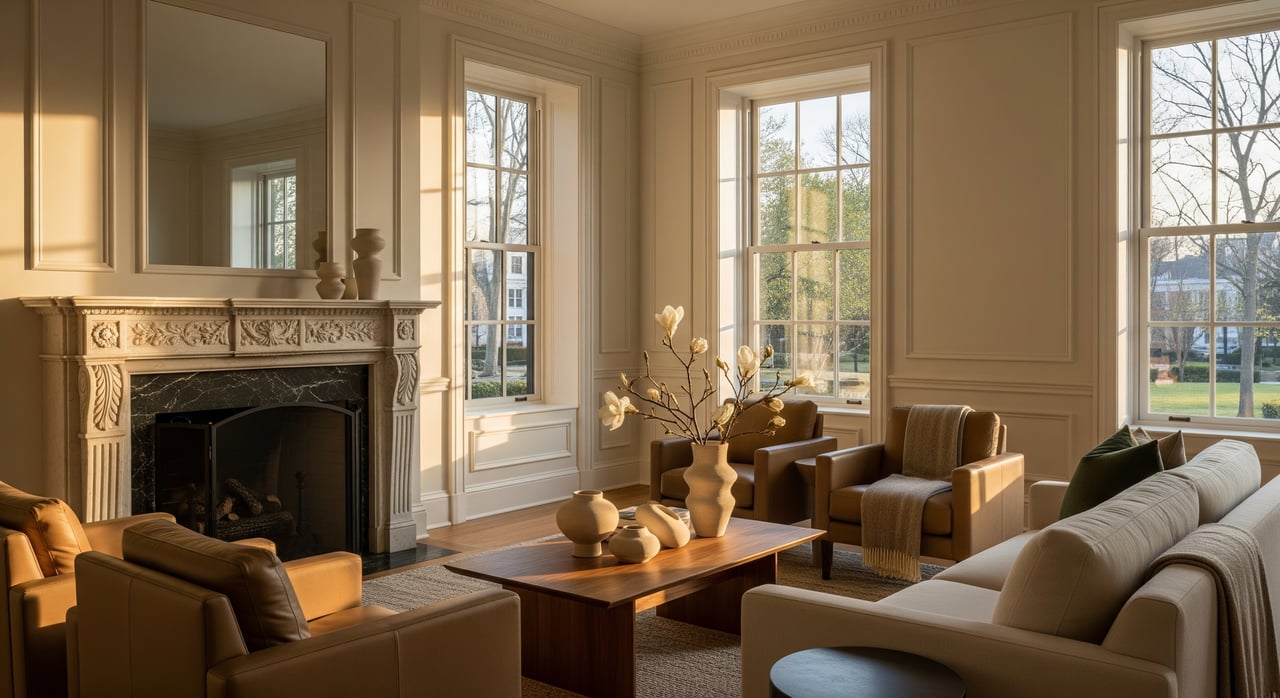
Many properties feature original plasterwork, fireplaces, millwork, and period windows. Staging should highlight these details rather than distract from them. Keep sightlines clear, scale furnishings to volume and ceiling height, and let the architecture lead.
Portions of Kalorama fall within historic districts. If your plan includes any exterior elements, coordinate early with the appropriate local preservation authority. Temporary exterior lighting, signage, or landscape adjustments should be compliant and reversible.
Curated, museum-level staging
Lead with restraint and scale
Use a less‑is‑more approach. Select fewer, better pieces and position them to guide circulation and reveal focal points. Match furniture to room proportions. Tall rooms can carry vertical art and larger case pieces; narrower townhouse rooms benefit from slim profiles and tailored silhouettes.
Art curation and security
High‑value art can elevate perceived quality, but it also raises logistics and risk. Work with an experienced art advisor to decide what to show, store, or temporarily loan. Maintain inventory lists and condition reports for each piece, and confirm insurance coverage or short‑term riders. Use professional art handlers for installation.
Furniture and textiles that honor the home
Blend refined contemporary furniture with period-appropriate accents to communicate both lifestyle and legacy. Custom rugs can define seating groups and protect parquet or original hardwood floors. Choose artworks that anchor camera shots in the foyer, formal rooms, and the primary suite.
Conservation-minded practices
Protect valuable works with low-heat, high-CRI LED accent lighting and avoid direct, prolonged light exposure. Skip open flames near art. Where feasible, use museum-grade hanging systems and UV-filtering window treatments during showings.
Lighting that flatters architecture
Layer ambient, task, and accent light
Layered lighting is essential. Ambient light sets a comfortable baseline. Task lighting supports function in kitchens, libraries, and baths. Accent lighting draws attention to mantels, moldings, and curated art. This mix creates depth in person and on camera.
Get color and clarity right
Use high Color Rendering Index bulbs, ideally 90 or higher, so finishes and artworks read accurately. Aim for warm to neutral color temperatures: 2700–3000K for residential warmth or 3000–3500K for a refined, gallery-like mood. Keep color temperatures consistent across rooms.
Exterior and twilight strategy
For evening showings and photography, plan discreet façade up-lighting, walkway illumination, and landscape accents to celebrate mature trees and setbacks. Coordinate interior lighting and exterior scenes for twilight photos that feel layered and inviting.
Photo-ready controls
Program lighting scenes with dimmers or smart controls for daytime and evening showings. Avoid mixed white balance in photos by aligning interior lighting to window light or using shades to control daylight.
Privacy-first showings and security
Pre-showing vetting and protocols
For off-market or invitation-only scenarios, pre-qualify buyers through their agents, with proof of funds or pre-approval where appropriate. Consider NDAs and no-photography policies for ultra-high-value listings. Start with broker-only previews to generate qualified interest while limiting public exposure.
On-site security and discretion
If requested, have on-site security or a concierge to manage access. Remove or secure documents, jewelry, and personal photographs. Lock down smart home displays and visible devices that could reveal private data or schedules.
Controlled scheduling and soft launches
Offer limited daily showing windows and reset the home between visits. A soft launch to a vetted network can create exclusivity while protecting privacy. Off-market strategies, pocket listings, or invitation-only open houses can reach the right buyers without broad exposure.
Vendor confidentiality
Require confidentiality agreements from all stagers, photographers, cleaners, and art handlers. Limit who has access to keys, alarm codes, and calendars, and keep a strict access log.
Digital-first visuals that sell the story
Build a best-in-class asset suite
Invest in high-resolution photography, a cinematic hero video, and floorplans with measured dimensions. Add a 3D tour for convenient remote viewing. Where appropriate and compliant, use drone imagery to show lot context and proximity to landmarks, while following all local regulations.
Lead with a clear narrative
Craft a concise narrative around privacy, provenance, architectural legacy, and a turnkey lifestyle. Sequence photos as a visual journey: entry, formal entertaining spaces, private suites, then terraces and gardens. Use lifestyle vignettes without displaying personal family photos.
Discreet online distribution
Offer watermarked, lower-resolution images for broad audiences and provide high-resolution galleries to vetted buyers under NDA. Consider a dedicated property microsite with a secure contact form or password-protected gallery for off-market audiences.
Virtual staging with transparency
If using virtual staging to demonstrate scale, label images clearly and retain originals. Note that staged items, art, or furnishings are not part of the sale unless otherwise specified.
Smart amplification and tracking
Target digital advertising to likely buyer pools and international channels typical for D.C. luxury. Monitor microsite views, brochure downloads, and hero video engagement to qualify interest and adjust targeting.
A practical Kalorama checklist
Pre-staging
- Inventory and photograph valuable items; finalize insurance or loan documents for any borrowed pieces.
- Coordinate any exterior staging elements with the appropriate preservation authority.
- Vet all vendors and execute confidentiality agreements.
Interior staging
- Remove personal photos and sensitive documents; replace with curated art or objects.
- Use museum-grade hanging for valuable artworks with secure anchors.
- Scale furniture to room proportions and keep sightlines open from the entry.
- Dress kitchens and baths with restrained, high-quality accessories only.
Lighting and technology
- Standardize bulb color temperature and select high-CRI LEDs.
- Install temporary picture lighting where needed; program lighting scenes for showings and photos.
- Test smart home systems and remove personal accounts from visible devices.
Exterior and grounds
- Groom landscaping to highlight mature trees and privacy setbacks.
- Stage terraces and patios with proportional, weather-appropriate furniture.
- Add temporary exterior lighting for twilight photography and evening appointments.
Showings and security
- Set scheduled, vetted showing windows and reset between visits.
- Provide a broker packet with provenance highlights, floorplans, and documentation for vetted buyers.
When museum-level staging pays off
In Kalorama, buyers expect craftsmanship, provenance, and discretion. Museum-level staging showcases the architecture, instills confidence, and keeps focus on what matters. The right lighting plan, curated art, and privacy-minded logistics can shorten time to contract and support stronger outcomes.
If you want a boutique, full-service approach that manages everything from curation and conservation-minded handling to cinematic visuals and controlled distribution, connect with a trusted local advisor. For a tailored plan specific to your property, reach out to Jeff Lockard for a confidential consultation.
FAQs
Should you display valuable art during Kalorama showings?
- Yes, selectively. High-quality art can elevate perception, but use an advisor, document condition, confirm insurance, and employ professional handlers.
How can you stage while preserving historic features?
- Favor reversible methods: freestanding furniture, protective rugs, and non-invasive hanging systems. Avoid permanent changes without approvals.
How private can your online listing be in Kalorama?
- Very private. Use password-protected galleries for vetted buyers, watermarked public assets, and soft launches or pocket listings when appropriate.
Is virtual staging acceptable for luxury listings?
- Yes, if clearly disclosed and original photos are retained. Note that staged items and art are not included in the sale unless specified.
What lighting specs work best for Kalorama interiors?
- High-CRI LEDs (around 90 or higher) with consistent 2700–3500K color temperature, layered as ambient, task, and accent for a museum-quality effect.