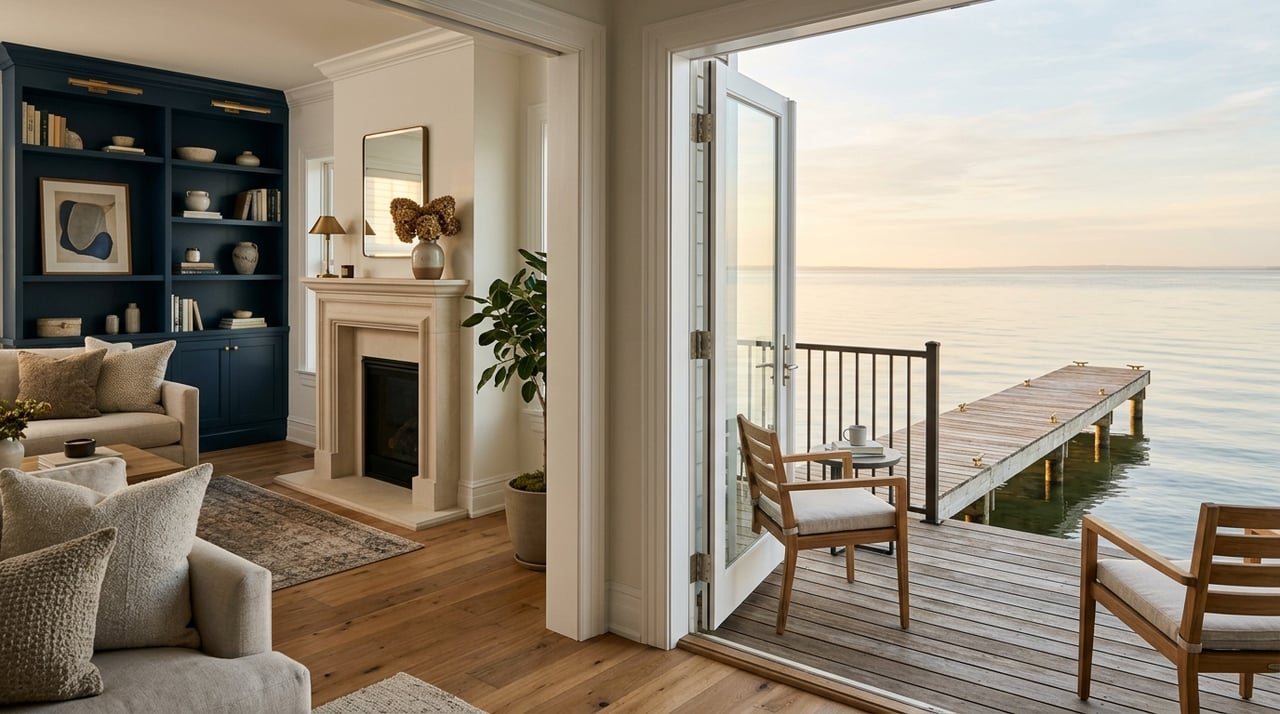
If you picture Georgetown as all shopping streets and weekend crowds, waterfront townhome living may surprise you. Life here blends historic streetscapes, riverfront open space, and a daily routine that can feel both energetic and tucked away. If you are wondering what it is actually like to call this part of Georgetown home, this guide walks you through the setting, pace, and practical details. Let’s dive in.
Georgetown waterfront setting
Living in a Georgetown waterfront townhome means you are close to one of Washington’s most recognizable neighborhood landscapes. Georgetown sits in Northwest DC, with the Potomac River to the south and Rock Creek to the east, and the waterfront area connects closely to both the river and the C&O Canal.
That setting shapes the feel of daily life. You can move from quieter residential blocks to the activity of the waterfront, M Street, and the canal corridor within a short walk. It gives the neighborhood a layered rhythm instead of a single, uniform pace.
Georgetown also offers unusual variety in a compact area. The neighborhood includes the Georgetown Waterfront, the C&O Canal, Wisconsin Avenue, Book Hill, and Cady’s Alley, so your everyday routine can include everything from river views to historic side streets and design-focused retail corridors.
The pace of daily life
A big part of the appeal is how easy it is to build movement into your day. Georgetown Waterfront Park includes 10 acres of recreational space along the Potomac, with a car-free pathway used by pedestrians, cyclists, and skaters. From the path, you can look out toward boaters, kayakers, crews, Theodore Roosevelt Island, and Key Bridge.
For many townhome residents, that means the river is not just scenery. It becomes part of your morning walk, your weekend routine, or the place you go to reset after work. The park also includes features like a labyrinth, a seasonal fountain, rain gardens, a canoe or kayak launch, and a boat ramp.
The canal adds a different kind of texture. It begins at mile 0 in Georgetown and remains one of the neighborhood’s defining historic landscapes. As of 2026, restoration work on the locks and walls continues through Winter 2026, with intermittent towpath detours in Georgetown and lowered water in the canal during construction, so the experience may vary depending on the day.
Quiet blocks near active streets
One of the most appealing parts of Georgetown townhome living is the contrast between busy commercial streets and quieter residential blocks. Georgetown’s business district includes more than 470 shops, restaurants, and institutions, and M Street often serves as the entry point for visitors.
Yet north of M Street, the tone changes. The neighborhood is known for tree-lined residential streets and homes dating back as early as the 18th century, ranging from modest row houses to larger historic residences. For you as a resident, that separation can make home feel distinct from the neighborhood’s retail energy.
This is one reason Georgetown often feels more nuanced than first-time visitors expect. You can enjoy access to dining, shopping, and the waterfront while still returning to a block with a more residential atmosphere.
Townhome character and architecture
If you are drawn to Georgetown, the architecture is likely part of the appeal. The neighborhood is known for federal-style architecture, historic brick and frame row houses, cobblestone streets, and grand estates dating to the mid-1700s. The Georgetown Historic District, created in 1950, was the first historic district in Washington and is also a National Historic Landmark.
For townhome owners, that history is not just visual. Exterior changes are reviewed through Georgetown’s preservation process, which can involve the Old Georgetown Board, the Commission of Fine Arts, and, in some cases, the Historic Preservation Office and HPRB.
In practical terms, that often means the streetscape stays visually consistent over time. Much of the modernization in Georgetown homes tends to show up inside the property rather than on the front facade. If you value historic character and a strong sense of place, that can be a major advantage.
Walkability and everyday convenience
Waterfront townhome living in Georgetown is highly walkable, and that shapes how the neighborhood feels. Coffee, breakfast, errands, and dinner plans can all fit into the same outing without much planning.
The neighborhood directory includes bakeries, cafes, specialty shops, and restaurants throughout the area. Georgetown also has more than 150 clothing and fashion stores and more than 100 restaurants representing over 50 ethnicities, which gives you a wide range of nearby options for casual routines and social plans.
The pedestrian experience also benefits from ongoing upkeep in the commercial core. Georgetown BID says its Clean Team sweeps 142 block faces, 20 alleys, and the C&O Canal Towpath each day, which supports the orderly, well-maintained feel many residents notice.
Shopping and dining close to home
If you enjoy being able to step out for an easy meal or browse local shops on foot, Georgetown delivers a lot within a relatively compact footprint. Wisconsin Avenue is a center of small business activity, with long-standing businesses alongside newer cafes and shops in repurposed historic buildings.
Cady’s Alley adds a more design-oriented feel, with more than 20 home furnishing showrooms plus fashion and specialty boutiques. Book Hill offers galleries, locally owned boutiques, cafes, and antique shops. Together, these areas create a more layered retail experience than a typical commercial district.
The waterfront itself becomes more social later in the day. Around Washington Harbour and the riverfront, the atmosphere leans toward patio dining, outdoor activity, and evening energy. That can be a real plus if you want a home base that feels connected to the city without sitting in the middle of a fully commercial setting.
Evenings on the riverfront
The riverfront changes character as the day goes on. The Georgetown waterfront guide highlights patio dining, river cruises, and water taxis, while Washington Harbour is known as a dining destination overlooking the Potomac.
That means your evenings can be as quiet or as social as you want them to be. You might take a walk along the park, meet friends for dinner with river views, or simply enjoy living near a part of the city that feels active and scenic after dark.
At the same time, it is fair to expect some activity in the area. A waterfront townhome here is not about total seclusion. It is more about having a private residence within a pedestrian-oriented neighborhood where public space, dining, and river access are part of the setting.
Getting around Georgetown
One of the practical tradeoffs of Georgetown is transit access. The neighborhood is walkable, but it does not have a direct Metro stop. Foggy Bottom-GWU is about a 15-minute walk, and Rosslyn is a short walk across Key Bridge.
Bus service, biking, rideshare, and walking all play a role in how residents move around. Georgetown also has nearly 50 public bike racks and several Capital Bikeshare stations, which supports a more flexible, car-light routine for many people.
If you drive, parking is available but managed carefully. Georgetown has 20 lots and garages with more than 3,800 total spaces, while residential street parking is generally limited to two hours during operating hours for vehicles without a Zone 2 Residential Parking Permit.
Is a waterfront townhome right for you?
A Georgetown waterfront townhome tends to suit buyers who want more than just a home. It offers a combination of historic character, walkability, riverfront access, and proximity to dining and shopping that is hard to replicate elsewhere in Washington.
It can be especially appealing if you value architecture, a strong neighborhood identity, and the ability to move easily between calm residential streets and active public spaces. You are not choosing a purely quiet enclave or a purely urban corridor. You are choosing a place that combines both.
That balance is what makes this lifestyle distinctive. In Georgetown, the river, the park, the canal, and the historic streetscape are not background details. They shape what it feels like to live there every day.
If you are considering a Georgetown townhome and want guidance tailored to your goals, Jeff Lockard offers a discreet, informed approach grounded in deep experience with high-end Washington real estate.
FAQs
What is daily life like in a Georgetown waterfront townhome?
- Daily life often combines quiet residential blocks with easy access to the Potomac waterfront, Georgetown Waterfront Park, the C&O Canal, dining, shopping, and walkable errands.
How walkable is Georgetown waterfront living?
- Georgetown waterfront living is highly walkable, with nearby access to parks, cafes, restaurants, shops, and neighborhood services, though the area does not have its own direct Metro stop.
What makes Georgetown townhomes feel distinctive?
- Georgetown townhomes stand out for their historic architecture, brick row house character, preserved streetscapes, and proximity to both the river and the canal.
Is Georgetown Waterfront Park a major part of the lifestyle?
- Yes. The park’s 10 acres, car-free pathway, river views, and recreational features make it a central part of how many residents experience the neighborhood.
What should buyers know about the C&O Canal in Georgetown?
- The canal remains a defining part of Georgetown, but as of 2026, restoration work continues through Winter 2026, with intermittent towpath detours and lowered canal water during construction.
How do residents get around from Georgetown waterfront homes?
- Residents often use a mix of walking, biking, bus service, rideshare, and occasional driving, with Foggy Bottom-GWU and Rosslyn serving as nearby transit access points.