Wondering whether Woodley Park offers the best of both worlds in Washington, DC? If you want a neighborhood that feels connected to nature without giving up transit access and city convenience, Woodley Park stands out for exactly that balance. Here’s what it’s like to live in Woodley Park near Rock Creek, from the streetscape and housing mix to the daily rhythm around Connecticut Avenue. Let’s dive in.
Woodley Park at a Glance
Woodley Park sits in upper Northwest DC in Ward 3, where many neighborhoods are organized around small commercial centers with residential streets branching outward. In Woodley Park, that pattern shows up clearly along Connecticut Avenue, with shops and restaurants near the core and more residential blocks extending beyond it.
The neighborhood also carries a long connection to major public landmarks. Rock Creek Park and the National Zoo were established before much of Woodley Park’s later residential growth, which helps explain why the area feels shaped by parkland and civic space as much as by housing.
A Green Urban Setting
One of the biggest reasons people are drawn to Woodley Park is its setting near Rock Creek Park. The park spans nearly 3,000 acres across northwest and northeast DC and includes more than 30 miles of hiking trails, giving this part of the city a notably outdoors-oriented feel.
That green character is especially meaningful in an urban neighborhood. Even though the commercial stretch along Connecticut Avenue is active and built-up, the nearby parkland and leafy residential streets create a calmer atmosphere once you move away from the busiest blocks.
How the Neighborhood Feels Day to Day
Woodley Park often feels like two experiences in one. Near the Metro station and zoo access points, the environment is more active, with restaurants, neighborhood-serving retail, wide sidewalks, and outdoor seating along Connecticut Avenue.
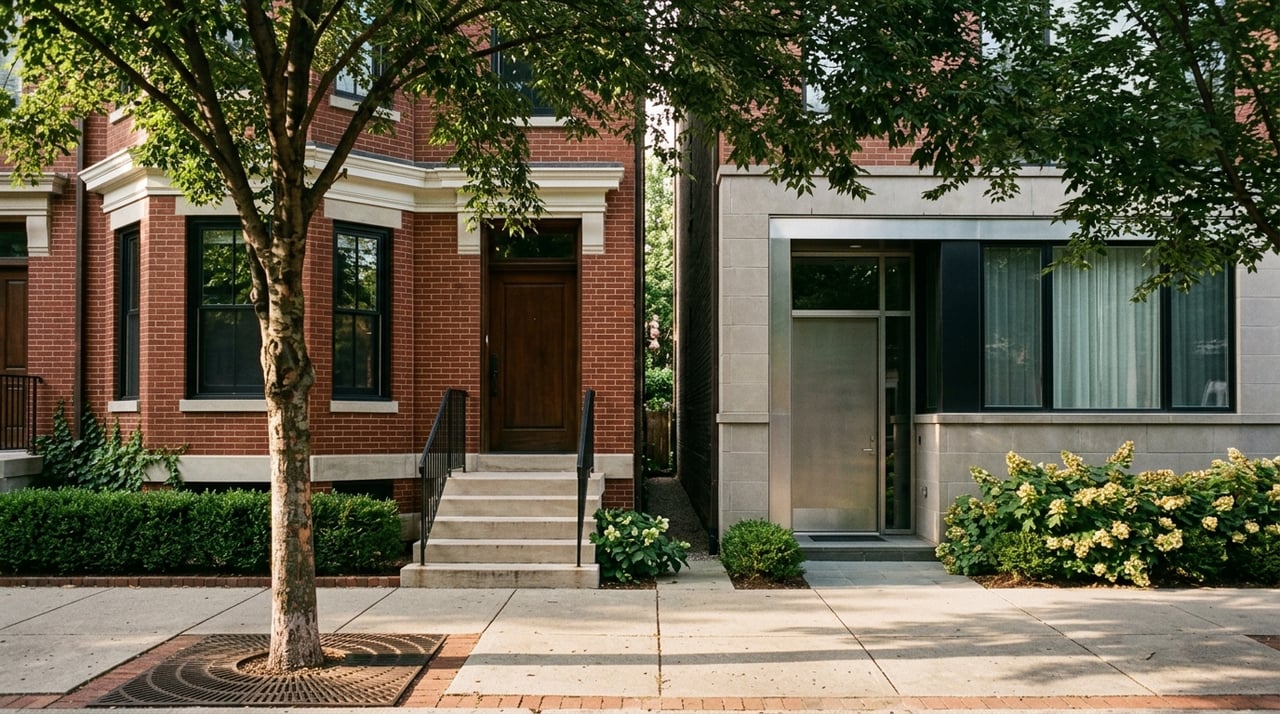
On the interior residential streets, the mood shifts. The neighborhood’s historic rowhouse fabric, setbacks, porches, and open greensward give many blocks a more settled and visually consistent feel.
That contrast is one of Woodley Park’s defining strengths. You can have a walkable daily routine close to transit and dining, while still living near quieter blocks that feel more residential.
Connecticut Avenue Convenience
Connecticut Avenue is the neighborhood’s main commercial corridor, and it plays an outsized role in everyday life. This is where you’ll find much of the activity, along with the Metro station and easy access to the zoo.
The corridor is lively and visitor-oriented, especially because of its proximity to one of the city’s best-known destinations. That means Woodley Park is not a secluded pocket cut off from the rest of DC. It is a neighborhood with real foot traffic and public energy in its central spine.
At the same time, planning research notes that this commercial area does not include formal outdoor green space. In practice, that means the neighborhood’s leafy reputation comes more from the surrounding residential streets and the edge of Rock Creek Park than from the avenue itself.
Living Near Rock Creek Park
For many residents, access to Rock Creek Park is more than a scenic bonus. It shapes how the neighborhood functions, whether you want space for a morning walk, trail access, or a quick change of pace from the city grid.
Because the park is so large and close by, it adds a sense of breathing room that can be hard to find in an urban setting. If you value proximity to nature but still want a well-connected DC address, this location offers a rare combination.
The park also contributes to the neighborhood’s visual identity. Woodley Park feels greener than many city neighborhoods not because its commercial core is park-like, but because substantial parkland sits right next to it.
The National Zoo as Part of Daily Life
The Smithsonian’s National Zoo is not just a nearby attraction in Woodley Park. It is part of the neighborhood’s geography and daily rhythm.
The zoo is located on Connecticut Avenue, and WMATA identifies the Woodley Park-Zoo/Adams Morgan station as the best transit option for getting there. That makes zoo-related activity a normal part of the area, especially near the station and commercial blocks.
For residents, that can be a plus or a tradeoff depending on what you want. Some people appreciate the energy and convenience that come with living near a major destination, while others may prefer homes farther from the busiest corridor.
Housing Types in Woodley Park
Woodley Park is best known for its historic rowhouses. In fact, rowhouses make up the overwhelming share of the housing stock within the historic district, and they help define the neighborhood’s streetscape through repeating facades, front porches, and orderly setbacks.
That said, the neighborhood is not limited to one housing type. Historically, it has included detached homes, semi-detached residences, and small apartment buildings, and that mixed pattern still helps explain the area’s range of housing options.
Near Connecticut Avenue, you will also find larger multifamily buildings. This gives the neighborhood a broader housing mix than people sometimes expect when they think of a historic Northwest DC enclave.
Historic Character You Can See
Woodley Park’s architecture has a strong visual identity. The rowhouse streets tend to feel cohesive and scaled, with repeated design rhythms that create a sense of continuity from one home to the next.
Features like porches, front setbacks, and open greensward matter more than they might seem at first glance. Together, they shape the experience of walking through the neighborhood and help preserve a sense of openness even where homes sit relatively close together.
This historic character is also actively managed. Development guidance for the Connecticut Avenue corridor is meant to support compatible mixed-use growth while respecting the surrounding historic districts.
Transit and Commuting
Woodley Park is a transit-connected neighborhood by design. The Woodley Park Metro station sits at 2622 Connecticut Avenue NW and functions as a central access point for both residents and visitors.
This is not a park-and-ride setup. The station has no parking, which reinforces the neighborhood’s transit-oriented character, but it does offer bike racks and bikeshare access for added flexibility.
If your routine depends on getting around without relying heavily on a car, that is a meaningful advantage. The neighborhood supports a walkable, rail-connected lifestyle with daily services clustered near the station.
Walkability and Everyday Routine
A lot of Woodley Park’s appeal comes from how easily daily errands and outings can fit into your schedule. The commercial strip includes restaurants and neighborhood-serving retail, and the wide sidewalks make the area feel designed for people on foot.
That kind of layout can simplify your routine. Whether you are heading to the Metro, meeting friends nearby, or enjoying a walk along Connecticut Avenue, many daily needs feel close at hand.
Still, it helps to understand the neighborhood honestly. The same walkability that makes the area convenient also means more activity near the station and zoo, so the experience can vary depending on exactly where you live.
Is Woodley Park Quiet or Busy?
The best answer is that it depends on the block. Near Connecticut Avenue, the Metro, and zoo access points, Woodley Park tends to feel busier and more public-facing.
Away from that core, the residential blocks likely feel calmer. The combination of historic rowhouse streets, adjacent parkland, and more defined residential fabric creates a different atmosphere than the active commercial corridor.
For many buyers, that mix is exactly the appeal. You can choose a location that leans more toward energy and convenience or one that feels more tucked away while still staying close to the neighborhood’s main amenities.
Why Woodley Park Appeals to Buyers
Woodley Park offers a combination that is hard to replicate in DC. You get immediate access to transit, proximity to Rock Creek Park, established architectural character, and a commercial corridor that supports daily life.
It also feels rooted in place. The neighborhood’s identity is not based only on housing inventory or retail offerings, but on a long relationship to the zoo, the park, and a historic residential fabric that still shapes the streets today.
If you are looking for a Northwest DC neighborhood with greenery, connectivity, and a strong sense of character, Woodley Park deserves a close look.
If you are considering buying or selling in Woodley Park or another high-value DC neighborhood, working with a trusted local advisor can help you evaluate not just the property, but the fit between the home, the block, and your lifestyle. Connect with Jeff Lockard for tailored guidance and a discreet, high-touch real estate experience.
FAQs
What is Woodley Park like for daily life in DC?
- Woodley Park blends a busy, walkable Connecticut Avenue corridor with more residential streets nearby, giving you access to restaurants, retail, transit, and park-adjacent calm in one neighborhood.
What kinds of homes are in Woodley Park?
- Woodley Park is best known for historic rowhouses, but the neighborhood also includes detached and semi-detached homes, small apartment buildings, and larger multifamily buildings near Connecticut Avenue.
How close is Woodley Park to Rock Creek Park?
- Woodley Park sits next to Rock Creek Park, which spans nearly 3,000 acres and includes more than 30 miles of hiking trails, making access to green space one of the neighborhood’s defining features.
Is Woodley Park convenient for commuting?
- Yes. The neighborhood is anchored by the Woodley Park Metro station on Connecticut Avenue, which supports a transit-oriented lifestyle and offers bike racks and bikeshare access.
Does Woodley Park feel quiet or active?
- Woodley Park can feel both, depending on location. The Connecticut Avenue corridor near the Metro and zoo is more active, while many interior residential blocks feel calmer and more residential in character.